When building a long-term financial strategy, choosing the right life insurance policy can feel overwhelming. While term life insurance offers simple, temporary coverage and whole life insurance provides rigid, fixed protection, a universal life insurance policy sits right in the middle—offering permanent protection paired with ultimate financial flexibility.
In this comprehensive guide, we will break down what universal life insurance is, how it works, its different types, and whether it is the right financial tool for your family.
What is a Universal Life Insurance Policy?
A universal life insurance policy (often abbreviated as UL) is a form of permanent life insurance. It provides lifelong coverage as long as premiums are paid and sufficient cash value is maintained.
Unlike traditional whole life insurance, universal life policies allow policyholders to adjust their monthly premium payments and alter their death benefit amounts over time as their financial situation changes.
How Does Universal Life Insurance Work?
Universal life insurance combines two distinct components into a single policy:
- The Death Benefit: The tax-free payout sent to your designated beneficiaries upon your death.
- The Cash Value Account: A tax-deferred savings component that earns interest over time based on current market rates or specified index performance.
[ Your Premium Payment ]
│
┌────────────────┴────────────────┐
▼ ▼
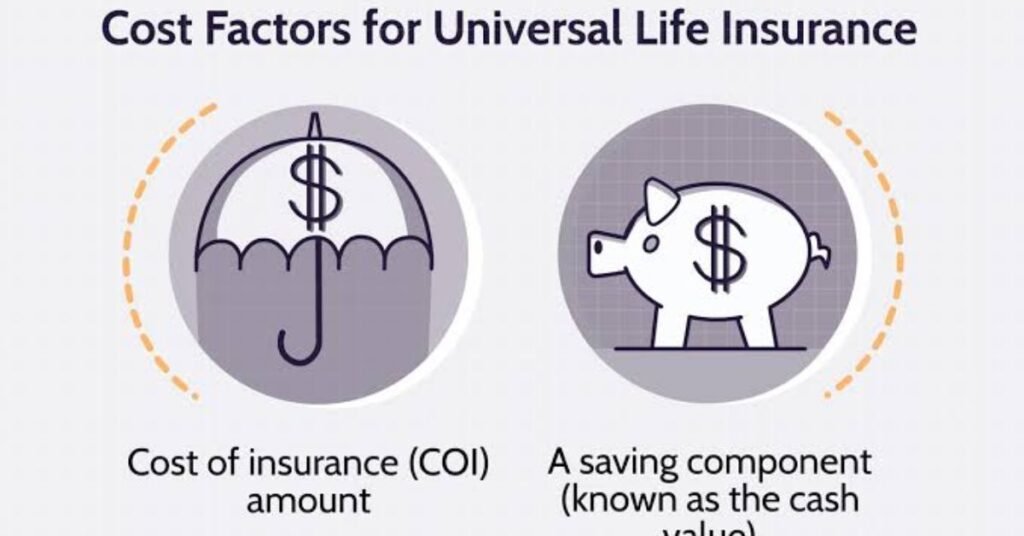
[ Cost of Insurance (COI) ] [ Cash Value Accumulation ]
(Keeps policy active) (Earns tax-deferred interest)
Every time you make a payment, a portion goes toward the cost of insurance (COI) and administrative fees, while the remaining balance enters your cash value account. As your cash value accumulates, you can use it to borrow funds, make withdrawals, or even cover your monthly premiums.
Key Features of Universal Life Insurance

1. Flexible Premium Payments
If your income fluctuates or you face unexpected financial hardship, universal life insurance allows you to lower or temporarily skip premium payments—provided your policy has built up enough cash value to cover the internal cost of insurance.
2. Adjustable Death Benefit
As your life needs evolve, you can adjust your coverage:
- Decrease the benefit: If your kids grow up or your mortgage is paid off.
- Increase the benefit: If you have a new child or buy a new home (note: increases may require a medical exam).
3. Tax-Deferred Cash Value Growth
You do not pay income taxes on the interest earned inside your cash value account while it accumulates over time.
Types of Universal Life Insurance Policies
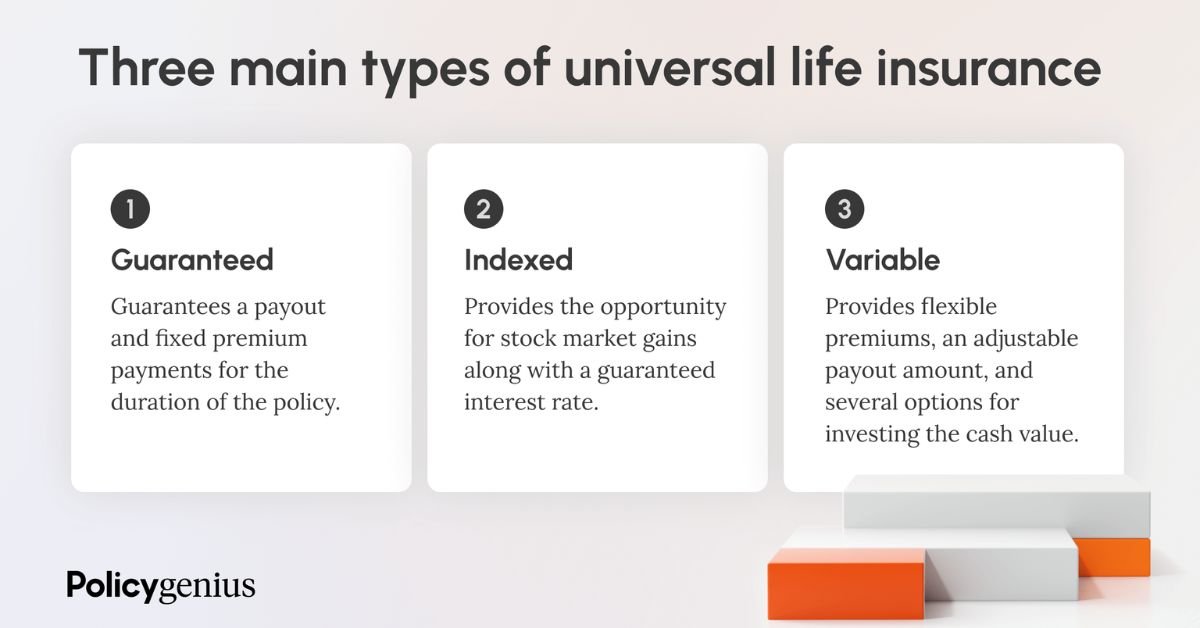
Depending on your risk tolerance and investment goals, there are three primary types of universal life insurance:
- Traditional Universal Life (UL): The cash value earns a fixed interest rate declared by the insurer, which fluctuates with broader market interest rates.
- Indexed Universal Life (IUL): Cash value growth is tied to a major stock market index, such as the S&P 500, offering higher potential upside while establishing a floor to prevent market losses.
- Variable Universal Life (VUL): Allows you to invest your cash value directly into sub-accounts like mutual funds. While this offers the highest growth potential, it carries investment risks if the market underperforms.
Universal Life vs. Whole Life vs. Term Life Insurance
To decide which policy suits your budget, here is how universal life compares to other popular options:
| Feature | Universal Life Insurance | Whole Life Insurance | Term Life Insurance |
| Coverage Duration | Permanent (Lifetime) | Permanent (Lifetime) | Temporary (10–30 years) |
| Premium Flexibility | Flexible (Adjustable) | Fixed (Guaranteed) | Fixed for term length |
| Cash Value Growth | Variable / Market-based | Guaranteed rate | None |
| Death Benefit | Adjustable | Guaranteed Fixed | Fixed for term |
| Relative Cost | Moderate to High | Highest | Lowest / Affordable |
Pros and Cons of Universal Life Insurance
Pros
- Lifelong Protection: Never expires as long as funded properly.
- Financial Flexibility: Pay more when you have surplus cash, or pay less during tight months.
- Access to Liquidity: Withdraw or borrow against cash value tax-free for emergencies, tuition, or retirement.
Cons
- Hands-On Management Required: If interest rates drop or you underpay premiums for too long, your cash value can deplete, causing the policy to lapse.
- Rising Insurance Costs: The internal cost of insurance (COI) increases as you get older.
- Higher Fees: Administrative and management fees are higher than basic term insurance.
Is Universal Life Insurance Right for You?
A universal life insurance policy is best suited for:
- High earners looking for additional tax-deferred savings mechanisms beyond 401(k)s or IRAs.
- Business owners or freelancers whose monthly income fluctuates year-round.
- Individuals seeking estate planning tools to transfer wealth tax-efficiently.
Conclusion
Universal life insurance offers an unbeatable blend of lifetime coverage, flexible payments, and tax-deferred savings growth. However, because these policies require ongoing monitoring to avoid lapsing, they are ideal for individuals who want an active role in their financial planning.